

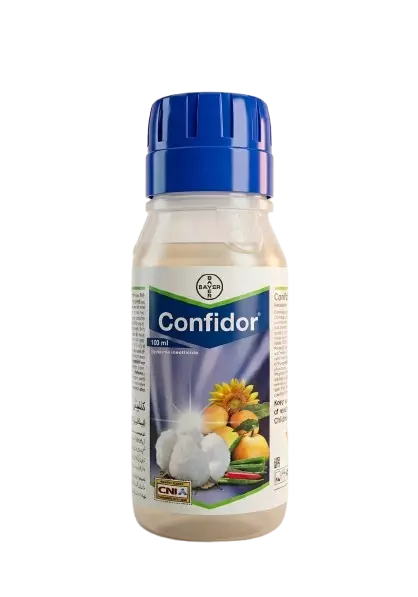
Confidor by Bayer crop science
Product Details
Confidor by Bayer crop science
Confidor Insecticide – Imidacloprid 17.1% SL
Sucking insect pests represent a significant challenge in modern agriculture, often causing indirect damage through the transmission of viral diseases and direct damage by depleting plant nutrients. Confidor Insecticide is a widely recognized systemic solution formulated to provide high-level protection across a diverse range of crops. Utilizing neonicotinoid chemistry, this product offers a reliable means of managing pest populations that are often difficult to control with contact-only treatments, ensuring that the health and productivity of the crop are maintained throughout the growing season.
Technical Characteristics and Features
The efficacy of this insecticide is centered on its active ingredient, Imidacloprid (17.1% SL), which is known for its excellent systemic properties and long-lasting residual activity. Key technical attributes include:
Systemic Mode of Action: The product is rapidly taken up by the plant tissues and translocated internally, providing protection to existing foliage and emerging growth.
Neurotoxic Mechanism: It works by interfering with the transmission of nerve impulses in insects, specifically acting on receptor proteins to cause nervous system dysfunction and eventual mortality.
Broad-Spectrum Control: While primarily focused on sucking insects, it is also effective against various species of beetles, leaf miners, flies, and soil-borne termites.
Residual Protection: Offers extended protection, reducing the window of vulnerability for the crop and potentially lowering the total number of required applications.
Soluble Liquid (SL) Formulation: The formulation is designed for easy dilution and uniform application, ensuring consistent results across treated areas.
Usage and Application Suitability
Confidor is utilized in a wide variety of agricultural and horticultural sectors due to its versatility and systemic efficiency.
Cotton and Sunflower: Effective against aphids, jassids, thrips, and whiteflies.
Rice: Provides robust control for Brown Plant Hopper (BPH), White-backed Plant Hopper (WBPH), and Green Leaf Hopper (GLH).
Vegetables (Chilli, Okra, Tomato): Targets key sucking pests including whiteflies and thrips.
Fruit Crops (Mango, Citrus, Grapes): Used to manage hoppers, psylla, leaf miners, and flea beetles.
Sugarcane: Employed specifically for the management of termites.
Dosage: The standard recommendation is 0.5 to 1 ml per liter of water, applied as a foliar spray. For sugarcane termites, specific soil-based application methods may be utilized.
Operational Reliability and Outcomes
The integration of Imidacloprid 17.1% SL into an Integrated Pest Management (IPM) program offers professional growers a stable and effective tool for protecting yield quality. Its compatibility with many conventional insecticides allows for flexible tank mixing and comprehensive spray schedules. By providing a deep-seated systemic defense, it ensures that even insects feeding on the undersides of leaves or hidden within the canopy are effectively managed. For agribusinesses, this represents a reliable investment in crop security, supporting consistent harvests and operational stability across multiple cropping cycles.