

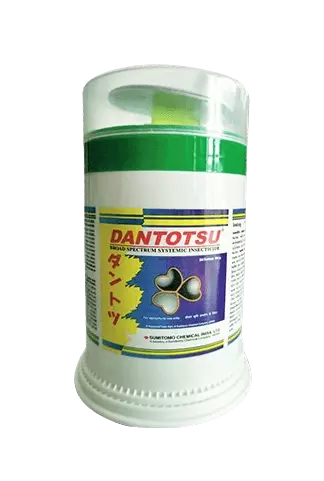
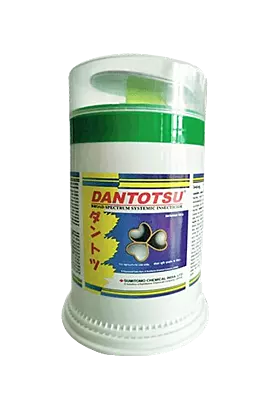
DANTOTSU Insecticide by Sumitomo
Product Details
DANTOTSU Insecticide by Sumitomo- Clothianidin 50% WDG
Sucking and chewing pests, such as aphids, whiteflies, and mealybugs, represent a persistent threat to crop vitality and yield. Dantotsu Insecticide is a specialized, broad-spectrum systemic solution designed to provide robust protection across a variety of field and plantation crops. As a high-concentration Water Dispersible Granule (WDG) formulation, it offers a reliable means of managing complex pest populations, ensuring that plants remain healthy and productive throughout their growth cycles.
Technical Characteristics and Features
This insecticide is powered by Clothianidin (50% WDG), a potent active ingredient known for its rapid systemic movement and long-lasting efficacy. It is categorized under a favorable toxicity profile (Green Triangle), making it a balanced choice for integrated pest management. Key attributes include:
Systemic Action: The formulation is quickly absorbed by the plant and translocated through its vascular system, ensuring protection for both existing foliage and new growth.
Neurotoxic Mechanism: It acts as an agonist to acetylcholine (ACh) receptors on the post-synaptic membrane of the insect's nervous system.
Rapid Cessation of Damage: Upon contact or ingestion, the product rapidly inhibits the pest's ability to feed, suck, or lay eggs, providing immediate relief to the crop.
Broad-Spectrum Efficacy: Effective against a diverse range of pests, including Brown Plant Hoppers (BPH), Tea Mosquito Bugs, Whiteflies, Thrips, and soil-borne threats like Termites.
WDG Formulation: The water-dispersible granules ensure easy handling, precise dosing, and excellent solubility during tank mixing.
Usage and Application Suitability
Dantotsu is versatile in its application, supporting both foliar spraying and soil drenching techniques depending on the crop and target pest.
Paddy: Applied at 12–16 g per acre to control Brown Plant Hoppers during early infestation.
Cotton: Used at 12–16 g per acre, often via soil drenching within seven days of germination to target aphids, jassids, and whiteflies.
Sugarcane: Applied at 100 g per acre via soil drenching at the time of sowing to prevent termites and shoot borers.
Grapes: Utilized at 200 g per acre through soil drenching to manage mealybugs and thrips.
Tea: Applied at 24–48 g per acre to control the Tea Mosquito Bug during the flowering stage.
For optimal results, applications should be conducted during the early morning or evening hours to ensure thorough coverage of the plant or target soil area.
Operational Reliability and Outcomes
The integration of Clothianidin 50% WDG into a crop protection program provides farmers and agribusinesses with a high-performance tool for maintaining field hygiene. Its ability to spread rapidly within the plant system ensures that even hidden pests are reached, while its residual activity reduces the need for frequent re-applications. By neutralizing pests before they can cause significant physiological stress, this insecticide supports more consistent yields and contributes to the overall stability of professional farming operations.